Early Relational Health
I am loved.
I am known.
I belong.
Whether you are raising a child, teaching one, caring for one, studying how children grow, or shaping the communities they grow up in, we share one goal: that every child can say these words and truly feel them.
Early Relational Health is how it happens—through the strong, caring relationships children build with the people who care for them. It grows from pregnancy onward, in everyday moments of comfort, connection, play, conversation, and simply being present.
Small moments.
Big connections.
What is Early Relational Health?
Nurturing early relationships between babies and caregivers are the foundation for a child's lifelong health, learning, and brain development.
ERH looks at the health of the relationship itself, not only at how a child grows.
The currency of early relational health is mutual, meaningful, and affirming moments of connection—what one person offers, and how the other responds.
It forms in the connections within and between us
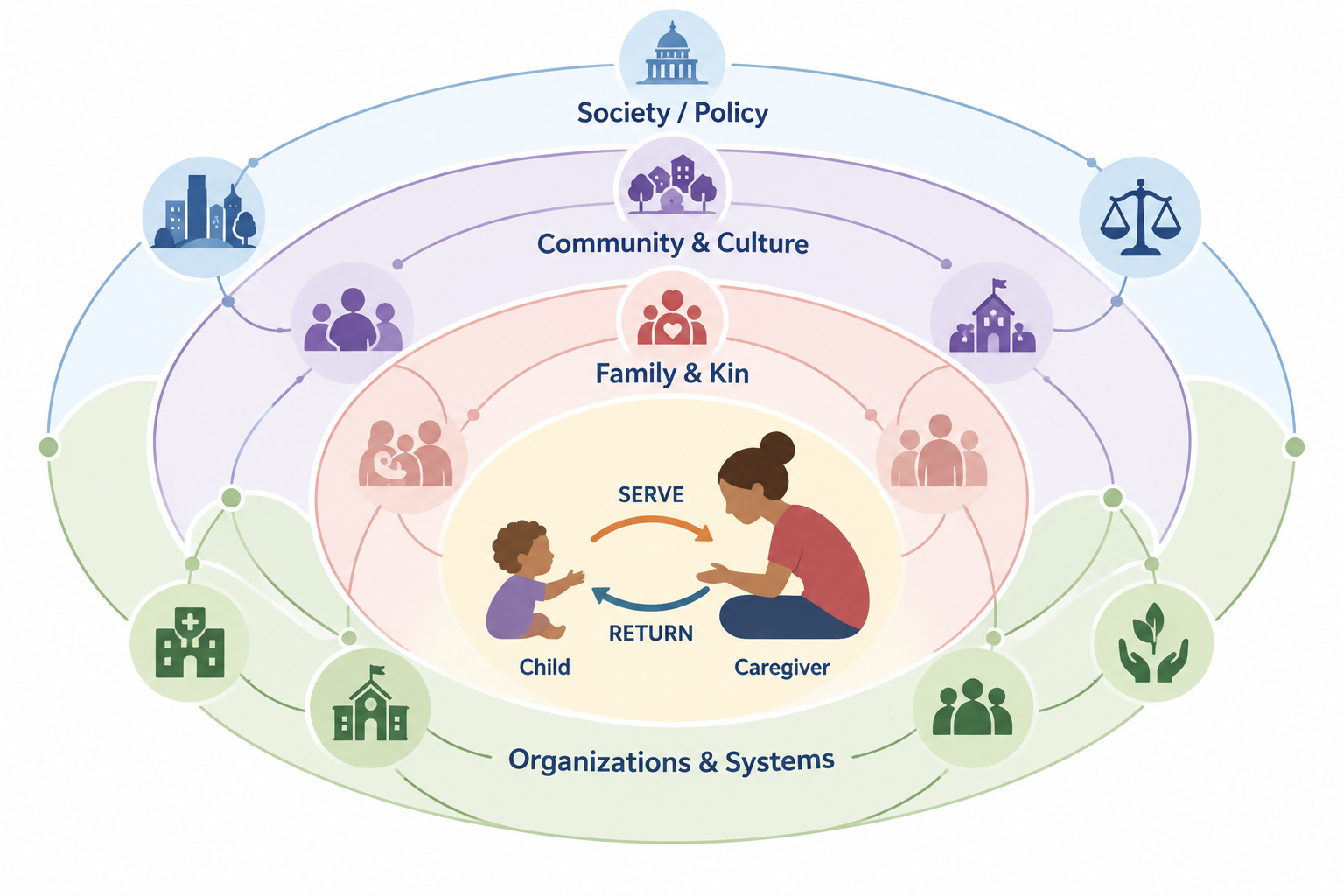
Scientists call it serve and return.
In that back-and-forth,
vital neural connections are formed.
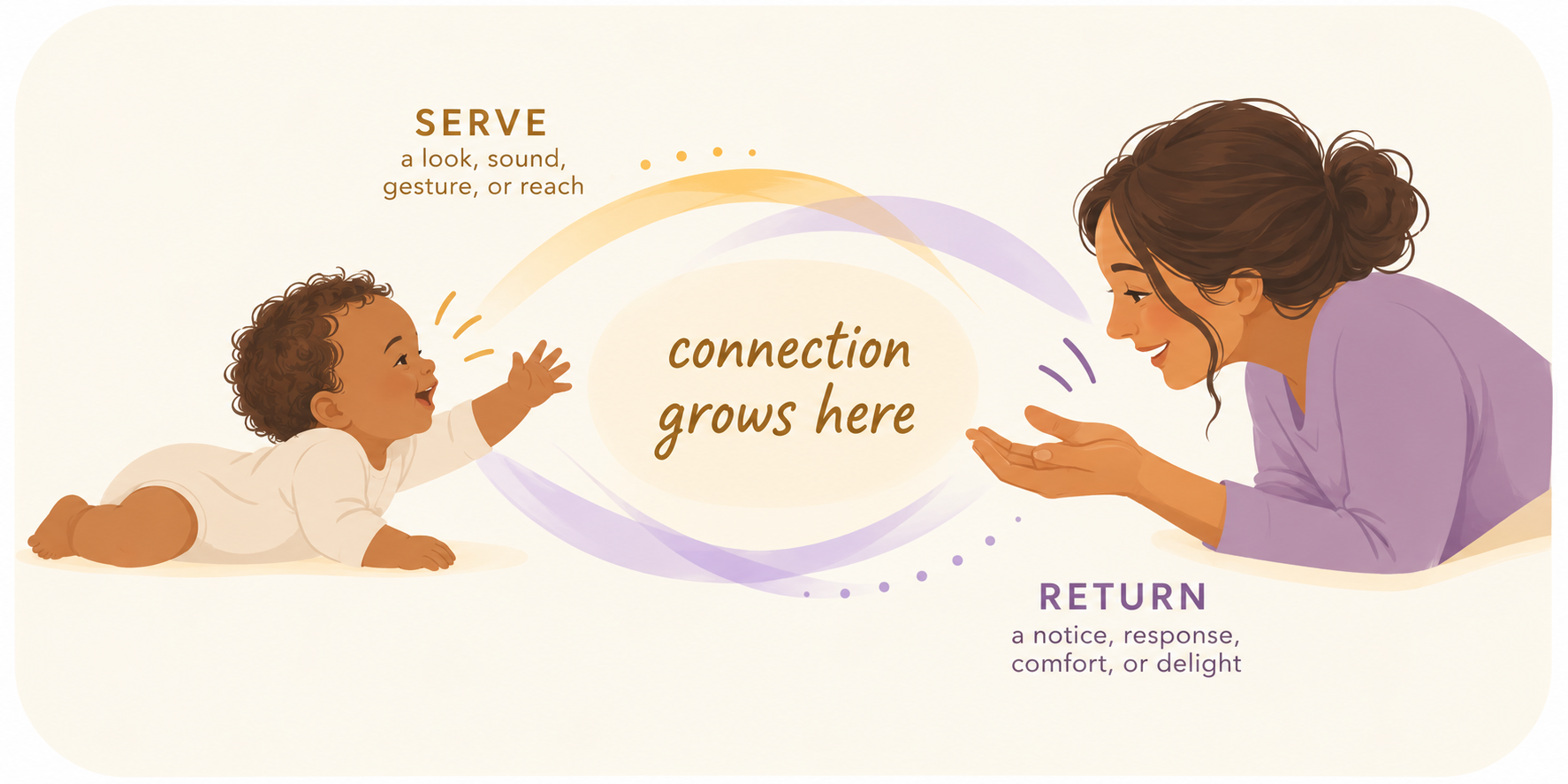

One small moment at a time.
Belonging Begins in Everyday Moments
Belonging is the feeling that I am safe here. I matter. There is a place for me. Children develop it through relationships.
When a baby cries and someone responds, when a toddler is welcomed back after a difficult moment, or when a child feels understood and accepted for who they are, they learn something powerful: I can count on others. I am important. I belong. Each of these moments is small. Repeated, they tell a child something lasting.
A warm look
A familiar voice
Being held when upset
Laughing together
Playing together
Listening with curiosity
Repairing after a difficult moment
Celebrating who a child is

Through these experiences, children discover not only who they are, but who they are in relationship with others.
Three Things to Know
ERH is built through repeated moments of connection that help children develop trust, confidence, and a strong sense of themselves. Here’s what makes those moments so powerful.
It's biology
Connection builds the brain
This is not just "good parenting" or emotional warmth. Every time a caregiver responds to a baby's coo, cry, or smile, vital neural connections are formed - wiring the child's brain for resilience, learning, and health.
It's forgiving
Rupture and repair is part of it
ERH is not about being a perfect caregiver. Relationships naturally have moments of disconnection - and the act of rebuilding that connection is what helps a child learn trust and regulation of emotions.
It's protective
Relationships are a biological buffer
Strong, supportive relationships act as a shield, protecting a developing brain from the harmful effects of stress and adversity. ERH shifts the question from "what's wrong" to "what's strong": positive childhood experiences can soften the effects of poverty and hardship.
And it looks different in every home.
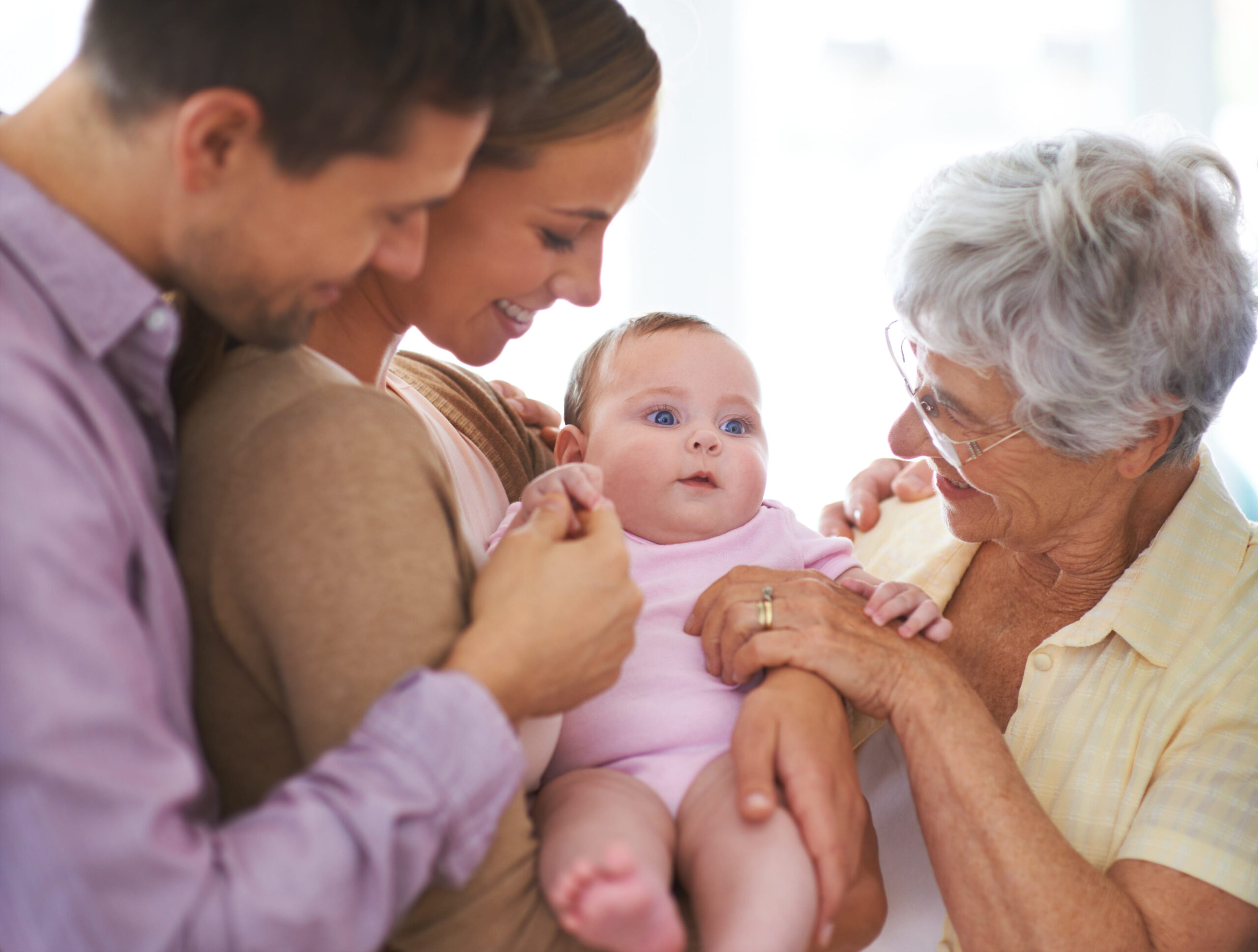
Every Family Has its Own Way of Belonging
There is no single "right" way to build strong relationships. Families express love, connection, caregiving, and belonging in many different ways.
Culture, language, family traditions, community, identity, and lived experience all shape how relationships grow. Early relational health honors these differences and builds upon the strengths already present within families and communities.
A safe place to grow from.
From belonging to becoming.
"There is a place for me. I matter to others. I can become who I am meant to be."
When children experience relationships in which they feel safe, valued, understood, and included, they have a stronger foundation from which to explore the world. Belonging gives children a secure place from which to grow—and that may be one of the most important gifts of early relationships.
Relationships Are Infrastructure
Healthy development does not happen within one family, classroom, clinic, or organization alone. It is sourced through nested networks of connection—within families, extended kin, communities, and the systems that support them.
A child's relational health depends on the caregiver's well-being—and caregivers need support too. When these networks are strong, children develop the capacities needed to participate in society: to trust, to regulate emotions, to empathize, and to work with others. When they are strained, the effects ripple outward—into classrooms, workplaces, and civic life. That is why ERH is not just a family issue but a societal one, and why healthy relationships are the backbone upon which thriving communities are built.

That is the work of this center!
How CAECMH Turns This Into Action
CAECMH brings together families, schools, healthcare providers, community organizations, universities, and public agencies to translate research into practice and build environments where relationships can flourish.
We support New Jersey families and children from pregnancy through age 12; provide developmental, autism-related, and mental health services; prepare the next generation of professionals; and strengthen the educators, caregivers, and professionals who serve children every day.
Practice
Family services and clinical support
Education
Training, coaching, and reflective practice
Research
Studying what works, with families
Policy
Helping systems align around connection
Where does early relational health meet you?
The story so far is the same for everyone. What you do with it depends on where you stand.
I am a parent or expecting
Becoming more attuned and responsive to mty infant, toddler, or young child - or preparing for one on the way.
Relief, not pressure: you don't need expensive toys or a program - present, responsive interactions are enough.
I work with families
Child care, early intervention, health, home visiting, crisis response.
Proactive rather than reactive: a lens for strengthening families before problems appear, not only responding after.
I am a student
Coursework, hands-on experience, and a place in this work.
The developmental science behind the everyday - and a place to practice it with real families.
I am a partner or funder
District and community administrators, academics, advisory board members, and foundations.
An upstream investment: strong early relationships prevent toxic stress and lower long-term costs in healthcare, special education, and justice.
Not sure where you fit? That's fine - just reach out.
Relationships today.
A stronger tomorrow.